
For some students, the challenge after matric isn't knowing what they love. It's finding their feet. This was exactly the case for one of our AEL Alumni, N.T Moolman.
NT grew up in Wakkerstroom, a small town on the Mpumalanga/KZN border, where he farmed with his father, gardened with his grandparents, and spent as much time outside as he possibly could. Nature wasn't something he discovered later in life, it was something that was already part of him.
When the time came to decide what to do after matric, AEL offered him a place to find his feet, explore what he loved, and figure out the best path forward before committing to a degree. That year turned out to matter more than he expected.
A passion for nature that was always there
NT recalls that he’d been farming with his dad from a young age, and he also started birding early on.
"I don't think I ever had a moment where I realised I'm into nature or conservation. It more just grew from there."
By the time he was 14, he already knew he wanted to study botany. So when he arrived at AEL, it didn't feel entirely new. It felt familiar, like returning to a place he'd already been.
Spending a year on the AEL’s beautiful campus felt like familiar territory.
How he found out about AEL's "outdoor programme"
NT first came across AEL through a radio interview, a conversation featuring Dave Pepler that caught his attention long before he was anywhere near ready to apply. The name stayed with him. Years later, when the time came to decide what to do after matric, his parents felt it would be the right move. A chance to see what the field was actually like and meet like-minded people.
"My parents decided it would be good for me to go to AEL and see what the field is actually like and meet like-minded people. And yeah, I was excited to go."
A year spent outdoors as the buffer between school and university
Leaving home for the first time is never easy. In the beginning, it felt like a long stretch between breaks, but very soon the campus started feeling like home.
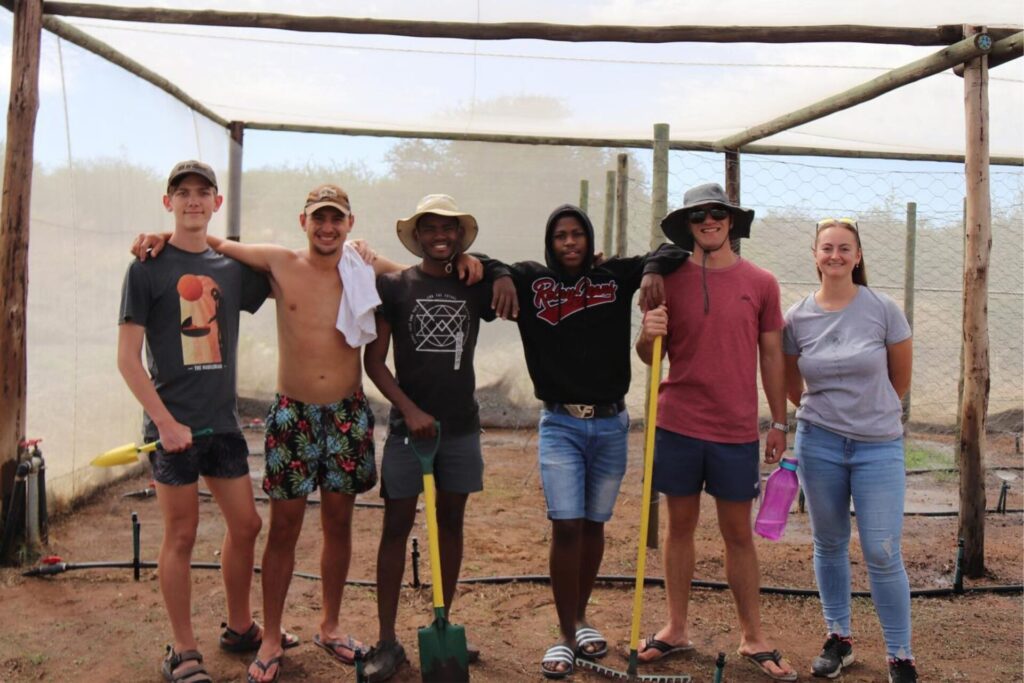
What NT found at AEL wasn't just a course. It was a community. A campus full of young people who had grown up the same way he had, drawn to the outdoors, passionate about the natural world, and looking for somewhere that made sense of all of it.
"It was actually quite a nice buffer between school and university. We had friends, we stayed together, we were away from home, but it wasn't entirely living on your own." NT isn't the only one who found it that way; read about how one AEL student used his outdoor gap year programme as a bridge to the future.
The academic programme itself offered NT his first real encounter with the concepts that would go on to define his studies. Topics like conservation ecology, competition, abiotic factors, and genetic drift. Ideas he was encountering for the first time, taught in a way that made them come alive.
Outside of class, he spent his time walking to the dune, visiting the river, and quietly developing a new skill he hadn't expected - photography. The free time at AEL wasn't empty time. It was time that belonged to him, and he used it well. See what an outdoor learning experience did for another AEL student — and watch a short video glimpse of life on AEL's campus.
"I used all my free time for interesting stuff."
The place that changed his next step
The most significant thing AEL gave NT wasn't a subject or a skill. It was people.
Through the tours, campus life and conversations he began connecting with individuals who shared his specific interest in botany and plants. Those connections led him to the broader botanical community in the Cape, to Kirstenbosch, to UCT, and ultimately to Stellenbosch University.
Before AEL, he had been registered elsewhere. Potchefstroom and Tuks were both on the table. But the network he built during his year on the Orange River quietly redirected his path.
"If it wasn't for AEL, I would not have come to Stellenbosch. In a way, it did help me decide on what the best path is for me."
Today, NT is studying BSc Biodiversity and Ecology at Stellenbosch University, with a focus on botany. He lives with a friend from his AEL year. He studies alongside another. A handful of his classmates from 2023 are now spread across the Cape, and they see each other often.
Watch more of what an AEL year looks like.
The community he was looking for in a small town on the Highveld? He found it on the banks of the Orange River. And it followed him all the way to Stellenbosch.
What a year in nature taught him
One moment from his year at AEL has stayed with NT in a way he didn't expect. During the welcoming week, the students were taken through a personality assessment. They were divided into groups. They talked about how different people think, act, and respond, and why.
It sounds like a small thing. But NT still comes back to it.
"I still come across this and realise that is what they taught us during the welcoming week. It just made me realise how people behave, and how you should take that into account when you meet someone."
For a young man who had spent much of his life surrounded by people who didn't quite share his world, that lesson about understanding others landed differently. It wasn't just personal development content.
His next goal is a master's degree, with a focus on plant systematics and taxonomy. After that, he's not entirely sure yet. But the direction is clear. And it started with a year in the right place, surrounded by the right people.
Why AEL's programme matters for students
NT’s story isn't about finding direction. It's about finding your people, and what becomes possible when you do.
For students who arrive after matric already knowing what they're passionate about, AEL offers something just as valuable as it does for those who are still figuring things out.
The Academy for Environmental Leadership is is a registered Private Higher Education Institution offering a SAQA accredited Higher Certificate in Conservation Ecology at NQF Level 5. It is not only a gap year. It is a structured, residential academic programme that combines formal study with practical fieldwork, outdoor experience, and genuine personal development.
For NT, it was the year that took him from the Highveld to Stellenbosch. And from knowing what he loved, to finally being surrounded by people who loved it too.
Keen to find out more? Explore the Higher Certificate in Conservation Ecology at afel.co.za